
Wolt Delivery: Food and more
Wolt OyFood & Drink
4.01.78K Reviews
- Version
- 26.34.3
- Installs
- 10.00M
- Age Rating
- Everyone
Screenshots
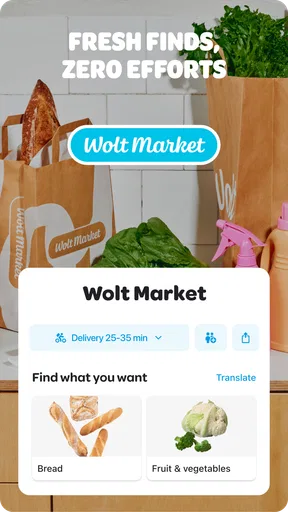

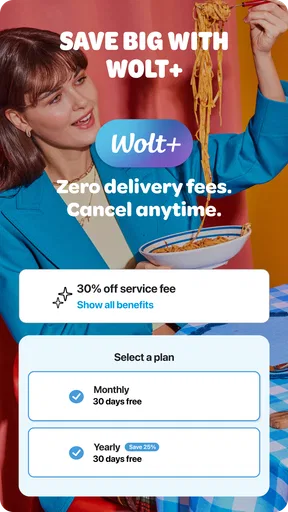
Our Review of Wolt Delivery: Food and more
 Analysis by Appyee
Ordering dinner from a phone is easy to enjoy during the first few days, but the more important question is whether the habit remains useful once the novelty disappears. I spent time looking at Wolt Delivery with that question in mind. It is a free Food & Drink app from Wolt Oy that brings restaurants, grocery stores and shops into one ordering experience. My first impression was positive: the app makes browsing feel more convenient than calling several places or opening separate websites. My longer-term opinion is more measured. It can earn a regular place on your phone, but mainly if the available local selection, delivery practicality and your own ordering habits line up.
The app is available to everyone rather than being aimed at a narrow age group, and it has become a familiar option for people who want meals or everyday items brought to them. Its average rating is 4.0 from around 500 thousand ratings, with about 1.8 thousand written reviews visible around the listing, and it has passed 10 million installs. Those figures suggest a substantial user base, but they do not remove the most important local question: whether the restaurants and shops near you make the service worthwhile.
What Wolt feels like during the first week
The first-week appeal comes from having several kinds of errands gathered in one place. I can approach the app with a clear plan, such as ordering a meal, or use it when I have not decided what I want yet. That difference matters. A restaurant-only service is usually better when I already know the cuisine or venue. Wolt is more useful when I am comparing a prepared meal with groceries or a quick shop order and want to make that decision without changing apps.
Browsing is at its best when I treat it as a practical shortlist rather than endless entertainment. I look at nearby options, check the menu or product selection, and then decide whether the convenience justifies the final basket. The broad mix of restaurants, grocery stores and shops gives the app a wider role than a simple takeaway directory. It can become a backup plan for a forgotten ingredient, a low-energy evening or a workday when leaving the desk is awkward.
One useful habit is to decide the purpose of the order before opening the app. If I am hungry and begin scrolling without a limit, the variety can make the choice slower rather than faster. If I need dinner for one, a few breakfast items or a last-minute household purchase, I can judge each option against that need. This sounds minor, but it is one of the differences between an app that saves time and one that quietly consumes it.
The first order also teaches me what kind of information I need to pay attention to. I do not judge a basket only by the item price. I consider the total shown at checkout, the practical delivery timing and whether the order is still sensible compared with collecting it myself or buying everything during a normal shop. The convenience is real, but it is not automatically the cheapest route. The best early experience comes from using Wolt when time, energy or access matters more than absolute price.
For a realistic example, imagine arriving home after work with no food ready and very little patience for cooking. I can use Wolt to compare a nearby meal with a small grocery order for the next morning. If the grocery option solves more than one problem, it may be the smarter choice even if the restaurant option looks more tempting. That kind of comparison is where the app feels more useful than a single-purpose delivery service.
Where the combined marketplace helps
The restaurant side is naturally the most immediately attractive. Menus are easier to browse on a phone than on a paper flyer, and I can make a decision without a phone call. Yet the grocery and shop sections are what give the app a chance at lasting value. They turn it from an occasional treat into a possible part of a weekly routine, especially for small top-up purchases rather than a full household shop.
That does not mean Wolt replaces every alternative. A supermarket visit is usually better when I need a large, planned basket and want to control costs closely. A restaurant’s own ordering channel may be preferable when I already know the venue and want the most direct relationship with it. Wolt’s advantage is convenience and comparison in one interface, not universal superiority in every transaction.
I also like the mental simplicity of having one familiar starting point. When I need to solve a food-related problem quickly, I do not have to remember which restaurant has its own app or which shop uses a separate delivery site. That convenience is strongest for people who value a predictable workflow. It is less impressive for someone who orders rarely, lives close to many venues or already has a system that works well.
Small decisions that improve the first experience
I recommend checking the complete order before committing, especially when combining convenience with impulse browsing. A meal can become noticeably less attractive when extras are added casually. I also compare the grocery basket with what I would buy in person, because delivery is most defensible when it prevents a real inconvenience rather than replacing a pleasant, nearby walk.
Another practical tip is to keep the first order uncomplicated. A small, clearly defined basket makes it easier to understand the app’s flow and judge whether the service fits my routine. Starting with a complicated mixed order can make any marketplace feel confusing, particularly when I am still learning how restaurant menus and shop products are presented together.
Whether it still earns attention month after month
After the first week, the central benefit changes from discovery to repetition. I no longer need to explore every category; I need to know whether Wolt helps me solve recurring problems. For me, the lasting value is strongest in three situations: an unexpectedly busy evening, a small grocery gap that cannot wait, and a need to compare several nearby options without making multiple calls.
The app is less compelling as a default replacement for cooking, supermarket shopping and local collection. Using delivery for every meal can make the convenience feel ordinary while the cost becomes harder to justify. I get more value when I reserve it for moments where it saves meaningful time or effort. That makes the service feel like a useful tool instead of an automatic reflex.
Its mixed marketplace can support a weekly rhythm. I might use the restaurant section for one planned meal, then return to the shop side when I need a small item. The important distinction is planning versus passive browsing. If I open the app only when I am already tired and hungry, I am more likely to choose quickly and overlook whether the order is good value. If I use it with a simple purpose, it becomes easier to repeat the experience without feeling wasteful.
Wolt also works well for people whose schedules change often. Someone working irregular hours, caring for a family member or dealing with limited mobility may value access more than a person with plenty of time and nearby shops. In those cases, the app’s recurring value is not just the menu selection. It is the ability to turn a difficult errand into a manageable phone task.
On the other hand, people with strict budgets should be selective. The free download does not make each order free, and convenience should not be confused with low cost. I would use Wolt as a comparison tool and an occasional solution rather than assuming that every basket is financially sensible. For a large planned shop, a conventional supermarket trip or a carefully chosen grocery alternative can be better.
How it compares with familiar alternatives
Compared with calling a restaurant, Wolt is more convenient for browsing and deciding. I can see several possibilities without repeating the same conversation, which is especially useful when I am ordering for more than one person. A phone call may still be better for unusual requests or when I prefer direct communication, but it is less efficient for ordinary menu comparison.
Compared with restaurant-specific apps and websites, Wolt offers a broader starting point. I do not need to remember each venue’s individual ordering process. The trade-off is that a single marketplace can feel less personal than dealing directly with a restaurant, and the final value depends on what is available in my area. I would choose the direct option when I already know exactly where I want to order and the extra comparison is not useful.
Compared with visiting a supermarket, Wolt wins on convenience for small urgent purchases. It loses when I want the widest control over a large basket, the simplest price comparison or the experience of choosing products myself. Compared with cooking, it wins on time and effort, not on routine cost or personal control. Seeing those trade-offs clearly prevents disappointment.
The maintenance burden of keeping it useful
There is not much technical maintenance involved in keeping a delivery app available, but there is a habit-maintenance burden. I need to keep my delivery details current, review the basket before ordering and avoid treating the app as a substitute for planning. The more casually I use it, the easier it is for convenience to become an expensive default.
I also need to maintain a personal sense of which categories are genuinely useful. The restaurant section may be my main reason for opening Wolt, while the grocery or shop options may be more valuable during certain weeks. Periodically reconsidering that balance helps me avoid browsing sections that do not serve my needs. The app can cover several errands, but I do not have to use every part of it.
Device compatibility is reasonably broad. The current version is 26.34.3 and requires Android 8.0 or later, so people using an older Android phone should check compatibility before planning around it. That detail matters more for users keeping an aging device than for anyone with a recent handset. The application itself is free, which makes trying it low-risk, but the real maintenance question remains whether the service continues to save enough effort to justify regular orders.
What creates fatigue over time
The biggest source of fatigue is repetitive browsing. A large selection sounds helpful, but when I am hungry it can create decision overload. The solution is not necessarily more options; it is a personal shortlist and a clear spending boundary. Without those, the app can turn a quick dinner decision into a long scroll through similar choices.
Another source of friction is the gap between the attractive starting price of an item and the complete order cost. I pay attention to the final screen rather than judging from menu items alone. This is particularly important for small baskets, where additional charges can change the logic of delivery. A larger order may make the trip feel more worthwhile, while a tiny order may be better handled during an existing outing.
Availability can also affect long-term satisfaction. The app’s usefulness depends on the local restaurants and shops it can show me, so two users can have very different experiences. Someone in an area with limited choice may find the broad marketplace less valuable than the description suggests. Someone surrounded by suitable venues may see it as a reliable everyday shortcut.
I would also avoid relying on any delivery app when timing is absolutely critical unless I have enough flexibility for the situation. A phone order is convenient, but convenience does not remove the need to plan around real-world conditions. For an important event or a meal that cannot be delayed, collecting the order or preparing something at home may be the calmer choice.
Privacy and notification fatigue are practical considerations for any app I use regularly. I prefer to keep alerts focused on information that helps me manage an order, rather than allowing the app to become a constant invitation to browse. That small adjustment makes it easier to keep Wolt as a tool I open intentionally instead of a source of unnecessary temptation.
My long-term verdict on Wolt Delivery
Wolt earns lasting space on my phone when I use it selectively. Its strongest quality is not simply that it delivers food. It combines restaurants, groceries and shops in a way that helps me solve different everyday problems from one starting point. That breadth gives it more staying power than a restaurant-only app, particularly for people with changing schedules or limited energy for errands.
Still, I would not recommend making it the automatic answer to every meal or shopping need. The service is most convincing when it saves real time, supports access or lets me compare local choices efficiently. It is less convincing for large planned shops, strict low-cost routines, direct restaurant relationships or situations where I can easily walk to the same place.
My advice is to install it, create a simple personal rule for when delivery is worth using, and judge the experience by repeated usefulness rather than the excitement of the first order. Keep the basket purposeful, inspect the final total, and use the grocery and shop categories when they solve a genuine gap rather than encouraging extra browsing. Those habits preserve the convenience while reducing the main reasons the app can become tiring.
With a 4.0 average and a large installed audience, Wolt is clearly established rather than experimental. The free price and Everyone content rating make it approachable, and Wolt Oy has built an app that can fit more than one kind of food-related errand. My final view is favorable but conditional: Wolt is worth keeping for recurring convenience, not for novelty alone. If the local selection suits you and you can use delivery deliberately, it can become a dependable part of your routine. If you mainly need the lowest possible cost or already have efficient local alternatives, it may be better as an occasional backup than a daily habit.
Verdict
Strengths of Wolt Delivery: Food and more
- Real-time courier tracking helps you follow the order’s progress.
- Scheduled deliveries make it easier to plan meals in advance.
- In-app support can help resolve missing or incorrect item issues.
- The app remembers addresses and payment details for faster checkout.
- You can often order groceries, pharmacy items, and other essentials.
Limitations of Wolt Delivery: Food and more
- Delivery fees and service charges can significantly increase the final price.
- Availability and delivery times vary widely by location and time of day.
- Busy periods may cause delays beyond the estimated delivery window.
- Substitutions or unavailable items can affect grocery orders.
- Some smaller restaurants may have limited menu customization in the app.
Similar Picks in This Category
View All
Rappi: Food Delivery, Grocery
Rappi, Inc - Delivery3.5

McDonald’s: Cupons e Delivery
Arcos Dorados4.3

Swiggy: Food Instamart Dineout
Swiggy4.7

Blinkit: Groceries & more
Blinkit4.8

foodpanda: food & groceries
Foodpanda GmbH a subsidiary of Delivery Hero SE4.0

Zomato: Food Delivery & Dining
Zomato4.7
Frequently Asked Questions
What is Wolt Delivery: Food and more?
Wolt is a delivery app that lets you order meals from local restaurants, groceries, convenience-store products, and other everyday essentials. After entering your address, the app shows available businesses, menus, prices, estimated delivery times, and applicable fees. Availability depends on your city, so the selection of restaurants, stores, and services can vary considerably by location.
How does ordering and delivery work on Wolt?
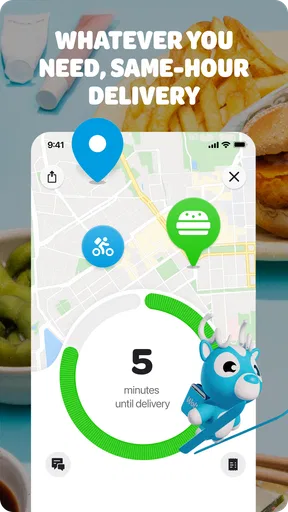
To place an order, choose a restaurant or store, add items to your basket, review the total, and select a payment method before confirming. The app normally provides order updates and delivery tracking, while the estimated arrival time can change because of preparation delays, traffic, weather, or courier availability. You should also check the delivery address and special instructions carefully before paying.
How much does Wolt delivery cost?
The final price may include the item subtotal, a delivery fee, a service or platform fee, taxes, and optional extras such as a tip. Charges are displayed during checkout, but they can differ between businesses and may change according to distance, demand, order size, or promotions. Wolt may also offer subscription benefits in selected markets, so review the complete breakdown before confirming an order.
Can I cancel or change a Wolt order after placing it?
Cancellation and modification options depend on the order status and whether the restaurant or store has started preparing it. If you notice a mistake, contact support through the order screen as quickly as possible rather than waiting for delivery. A cancellation may not always qualify for a refund, particularly after preparation has begun, and policies can differ by market and order type.
Is Wolt safe to use, and what should I know before downloading it?
Wolt uses an account-based ordering system with in-app payment and support features, making it convenient for regular deliveries. Nevertheless, users should verify restaurant information, allergy details, prices, delivery instructions, and the final total before ordering. The app requires location and account information for core functions, and delivery coverage, payment methods, promotions, refund rules, and available customer support may vary by country.
